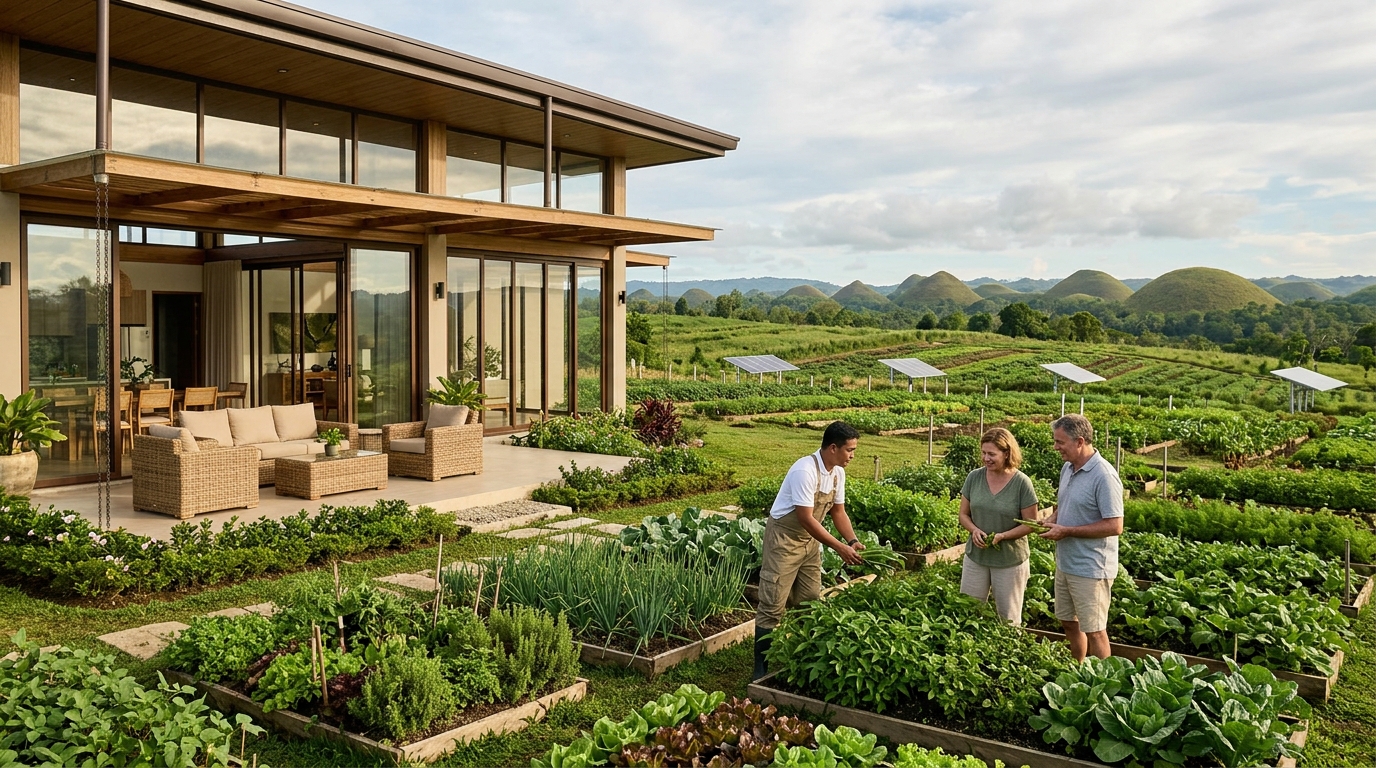
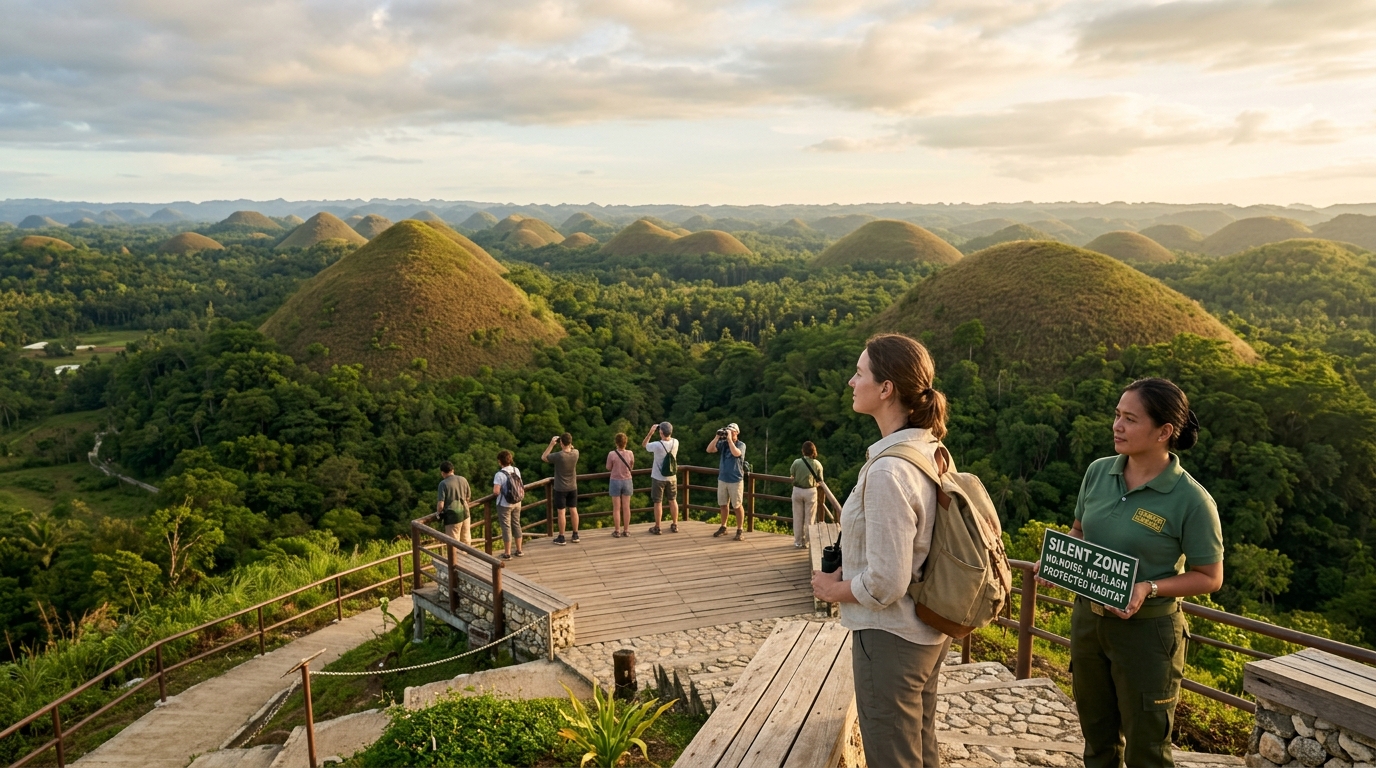
Bohol’s most iconic landmark is getting a sustainability makeover this April. The provincial government has launched the "Chocolate Hills Reset," introducing stricter regulations for viewing decks and expanding protected "Silent Zones" for the endemic Philippine Tarsier.
The Headline
For the hospitality sector, this is what they can call "Restorative Viewing." Following years of increasing foot traffic, the DENR and DOT have imposed a "Carrying Capacity" limit of 2,500 visitors per day at the main Carmen viewing complex. Tickets are now required to be booked 48 hours in advance through a centralized digital platform, ensuring a manageable and high-quality experience for all guests. The revenue generated from this premium pricing model directly funds new reforestation projects within the natural monument buffer zones. This shift toward quality over quantity is designed to preserve the geological integrity of the hills for future generations.
The Environment and Ecosystem
This "Reset" is particularly focused on the endangered Philippine Tarsier, whose habitat is now protected by mandatory "Silent Sanctuaries." Under the new rules, any viewing area within 500 meters of a known tarsier habitat must strictly enforce a "No-Noise, No-Flash" policy. Tour guides must now hold a specialized "Ethical Wildlife Certification" to lead groups into these sensitive zones. Local communities are being trained as "Tarsier Guardians," receiving a direct share of the tourism revenue in exchange for protecting the primates and their forest home. This community-based model ensures that conservation becomes a profitable venture for the local population.
Thinking of Traveling in the Summer?
As the summer season reaches its peak, the "Reset" is proving that sustainable tourism can be a powerful driver of economic value. International travel agencies are marketing these "Ethical Encounters" as premium experiences, attracting sophisticated travelers who are willing to pay more for responsible tourism. The province is successfully differentiating itself from other mass-market destinations in Southeast Asia by prioritizing its natural capital. Bohol is now recognized by the Global Sustainable Tourism Council (GSTC) as a model for how a destination can "reset" its brand to align with the values of the 2026 traveler.